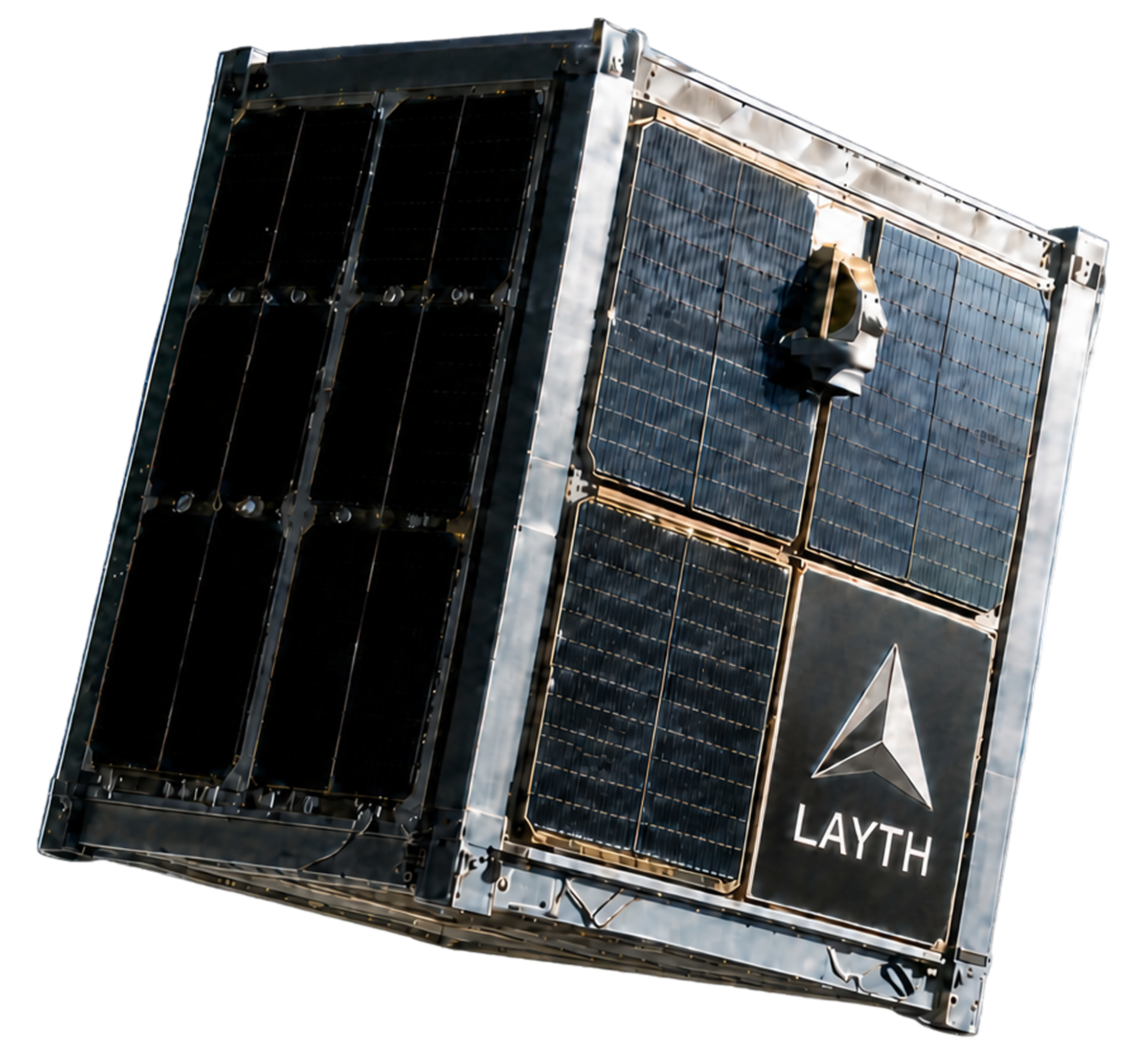
On May 21, 2026, a Saudi-built satellite successfully reached its target orbit — marking a defining moment for the Kingdom's indigenous space capabilities. The spacecraft, assembled and integrated entirely within Saudi Arabia by LaythTech, represents the highest level of domestic participation in a Saudi space mission to date.
Unlike previous Saudi-associated space programs where integration and testing occurred abroad, this mission was executed end-to-end within the Kingdom — from component procurement and AIT through launch vehicle integration support and on-orbit commissioning.
The Mission Profile
The satellite occupies a sun-synchronous orbit at approximately 520km altitude, providing optimal ground coverage geometry for the Earth observation payload. The spacecraft carries a dual-mode sensing suite: a high-resolution optical imager for 1.5m GSD imagery and an SAR transponder for all-weather, day-night observation capability.
Engineering Inside the Kingdom
The satellite bus was designed by LaythTech's systems engineering team using a modular architecture that enables configuration changes across mission types — the same platform can carry optical, SAR, hyperspectral, or IoT relay payloads.
Integration took place at LaythTech's ISO Class 7 cleanroom facility in Riyadh over a 14-week AIT campaign. Thermal vacuum testing was completed at KACST's facility in Riyadh, and vibration testing was conducted at a partner facility in Jeddah.
"Building and launching a satellite from Saudi soil isn't just a technical achievement — it's the proof that national industrial capability in space is real, not aspirational." — Eng. Abdulaziz Alsaeed, Founder & CEO
What the Mission Data Shows
In the first 72 hours post-separation, the satellite performed nominal across all subsystems. Attitude determination and control settled to within specification in under three hours.
- First image downlinked: T+18 hours from launch
- First X-band contact with Kingdom ground station: T+4.2 hours
- Power system performance: 103% of predicted generation at BOL
- All payload instruments: nominal at commissioning complete