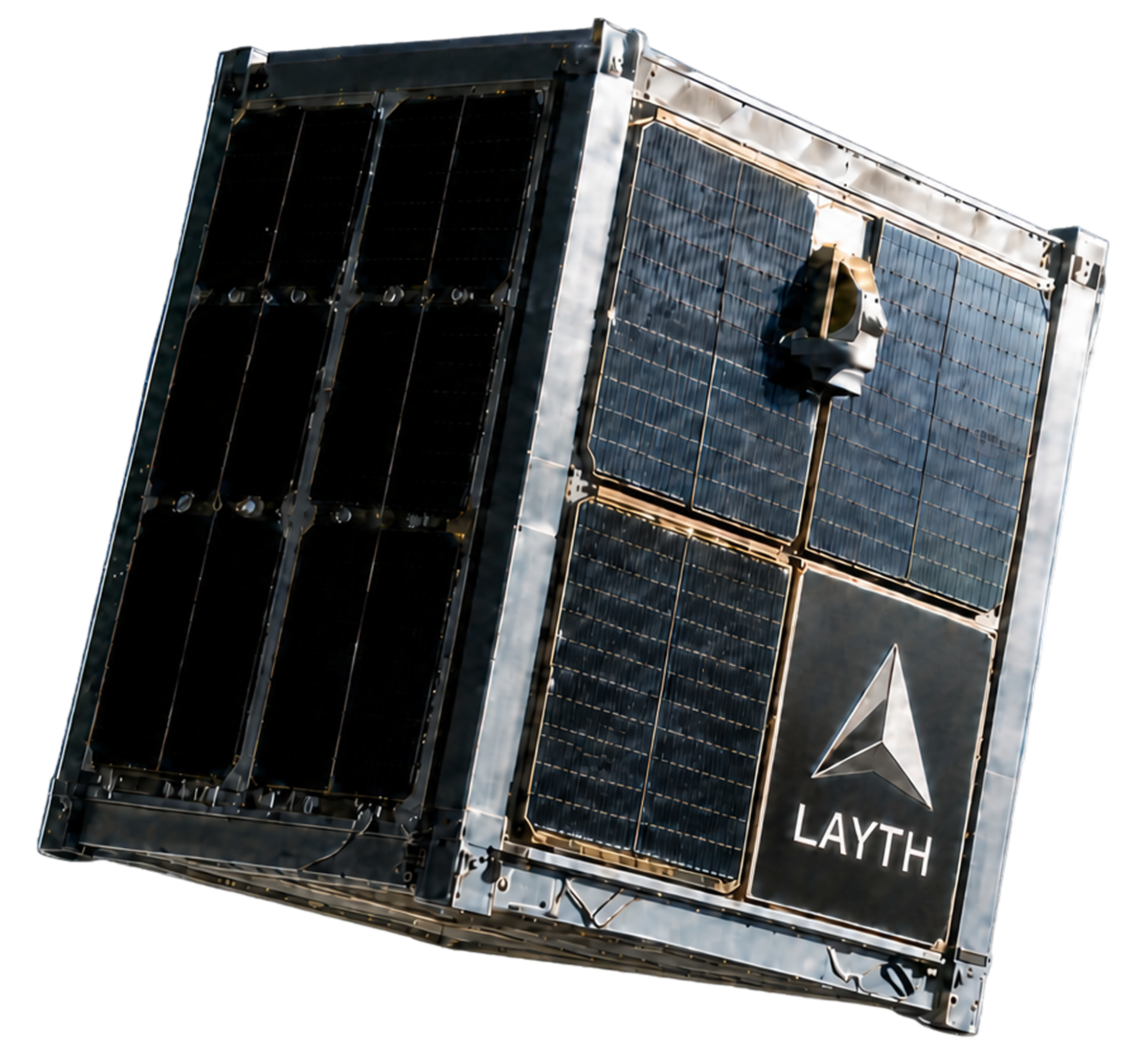
Running AI inference in orbit is fundamentally different from running it on the ground — not just because of the hardware constraints, but because the decision architecture that works in a data center fails catastrophically when latency to a human operator is measured in minutes, not milliseconds.
The Edge Computing Challenge in LEO
At 400km altitude in a 92-minute orbit, a satellite is out of ground contact for up to 85% of its operational time. Waiting for ground command to resolve an anomaly, replan a mission, or act on a detected event is simply not viable for time-sensitive applications.
Hardware Constraints at the Edge of the Atmosphere
Radiation in LEO causes bit flips, latch-up events, and long-term degradation in commercial COTS silicon. LaythTech's current on-orbit compute stack uses a hybrid architecture: a rad-hard processor for critical flight functions, paired with a COTS AI accelerator mounted in a radiation-shielded enclosure with watchdog monitoring.
This approach trades some performance headroom for operational reliability across a 3-5 year mission life — a design trade we believe is correct for sovereign infrastructure applications where availability is non-negotiable.